Teashop: A Joyful Display Font
There I was, staring at a blank brand board, trying to find the right visual voice for a new boutique coffee shop. The client wanted something warm, approachable, and a little playful—something that felt like a friendly greeting from the moment you walked in. That’s when I pulled out Teashop, a font that immediately made me smile.
A Font with Personality
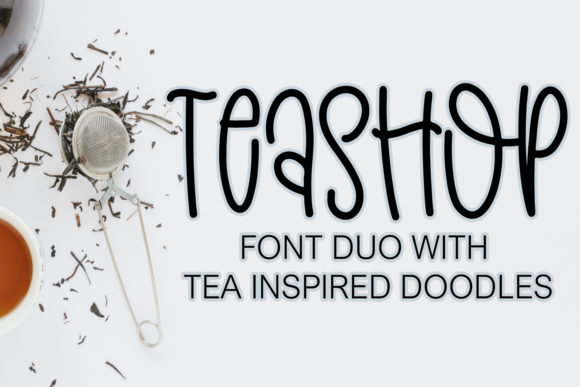
Teashop is a display font with a distinct personality. It balances smooth curves with sharp edges, creating a look that feels both modern and whimsical. The letterforms have a handcrafted quality, as if they were drawn with a pen and ink, but they’re clean enough to feel professional. This mix of softness and structure makes it incredibly versatile for a range of design projects.
When I first tested it on a logo concept, I was struck by how well it held up against more traditional typefaces. It didn’t feel out of place alongside a serif or sans serif font—it complemented them, adding a touch of character without overwhelming the design.
Real-World Testing
I used Teashop on a packaging mockup for a small-batch tea line. The font worked beautifully on product labels, where its quirky strokes added a sense of authenticity. It looked great on a business card too, giving the contact information a unique flair that stood out from the usual corporate fonts.
On a website header, Teashop brought energy and warmth. It wasn’t too loud, but it definitely caught the eye. When paired with a simple sans serif for body text, it created a nice contrast that kept the design from feeling too rigid.
In social media graphics, Teashop added a personal touch. Whether it was a promotional post or an Instagram story, the font felt natural and engaging. It had a way of making the content feel more human, which is exactly what the brand needed.
Strengths and Limitations
Teashop shines as a display font. It’s not meant for long blocks of text, and that’s okay. Its charm comes through in short phrases, headlines, and logos. It works best when used sparingly, allowing it to make an impact without distracting from the overall message.
That said, there are situations where Teashop might not be the best choice. In formal corporate settings, it could feel too casual. For small text sizes, like footnotes or captions, it might lose clarity. And in any project that requires high readability across multiple languages, it’s worth testing thoroughly.
One thing to keep in mind is that Teashop has a lot of stylistic alternates and swashes. These can be useful for customizing the look, but they also mean the font has a learning curve. It’s important to explore all the options before committing to a design.
Font Pairing and Design Applications
Pairing Teashop with other fonts can create interesting visual dynamics. A classic serif font like Garamond or Caslon can add elegance, while a clean sans serif like Helvetica or Montserrat brings balance. A script font could work well for a more ornate look, but it’s best to keep the combination simple to avoid clutter.
In editorial design, Teashop can be used for headings or pull quotes. On posters and flyers, it adds a lively energy that draws attention. For commercial design assets, like merchandise or templates, it can help differentiate a brand from the competition.
When working on a brand identity system, Teashop can serve as a signature element. It’s perfect for logos, signage, and stationery. But it’s also adaptable enough to fit into a broader typography system, especially when paired with more neutral typefaces.
Practical Tips for Using Teashop
If you’re considering using Teashop in your next project, start by testing it in different contexts. Try it on a mockup, a website layout, or a social media graphic. See how it looks in various sizes and colors. Pay attention to how it interacts with other design elements.
Before using it in client work, check the licensing terms. Make sure you have the right to use it in all the intended applications, including print, web, and digital products. Some fonts come with restrictions that can affect your workflow, so it’s always good to verify.
Finally, remember that Teashop is a creative tool. It’s not about following rules—it’s about finding the right expression for your brand. Use it with intention, and it can become a powerful part of your design language.